
My closet used to be the messiest corner of my bedroom. Every morning I would stand in front of it, dig through a pile of sweaters, and still decide I had nothing to wear. Sound familiar? Here is the short answer: closet organization for small spaces works when you keep fewer clothes, give every section one job, and make everything visible at a glance. You do not need a bigger closet. You need a system you can actually keep up with on a busy Tuesday morning. These seven systems are the ones that stuck for me, and they survive real life, laundry piles and all.
1. Start With a Hard Edit
Before you buy a single bin or hanger, take everything out. Yes, everything. I know it sounds dramatic, but you cannot organize clothes you cannot see. Lay it all on the bed and sort it into three piles: keep, donate, and not sure.
The “not sure” pile is where most of us get stuck, so here is my rule. If you have not worn it in a year, it goes. If it does not fit right now, it goes in a box under the bed, not back in the closet. And if you own four versions of the same black sweater (guilty), keep the best one and let the rest go.
I cut my closet nearly in half the first time I did this, and honestly it felt scary. Then getting dressed got easier overnight. Fewer choices meant faster mornings, and I could finally see what I actually owned. Editing is not a one-time event, by the way. I do a quick pass every season, and each time it gets faster.
2. Give Every Zone a Job
A small closet falls apart when everything is mixed together. Work shirts next to gym clothes next to that one fancy dress you wear twice a year. The fix is simple: split the closet into zones and give each zone one job.
Mine looks like this. The left side is work clothes, the middle is everyday casual, and the right side is going-out and dressy stuff. The top shelf holds off-season clothes and bags, and the bottom holds shoes in two neat rows. That is it. Nothing fancy, just a plan I can remember without thinking.
When you reach for a shirt, your hand should land in the right zone without you having to hunt. If you share a closet, give each person their own zone, even if it is only half a rod. And if your whole bedroom needs the same treatment, our Bedroom ideas can help you plan the rest of the room around a closet that finally makes sense.
3. Closet Organization for Small Spaces Starts With a Capsule Wardrobe
Here is the system that changed everything for me. A capsule wardrobe is a small set of clothes that all work together, usually 30 to 40 pieces for a season, and it is made for closets like ours.
Pick a simple color base first. Mine is black, white, denim, and one warm color I actually like wearing (mustard, in my case). Then choose pieces that mix and match: a few tops, two or three bottoms, one good jacket, and shoes that go with all of it. If a new piece does not match at least three things you already own, it does not come home with you.
The beauty of a capsule is that your closet stops being a storage room and starts being a toolkit. I stopped buying random sale items that never matched anything, and my closet finally had breathing room. You do not have to be strict about the number. Start with fewer pieces than you think you need, live with it for a month, and adjust from there.
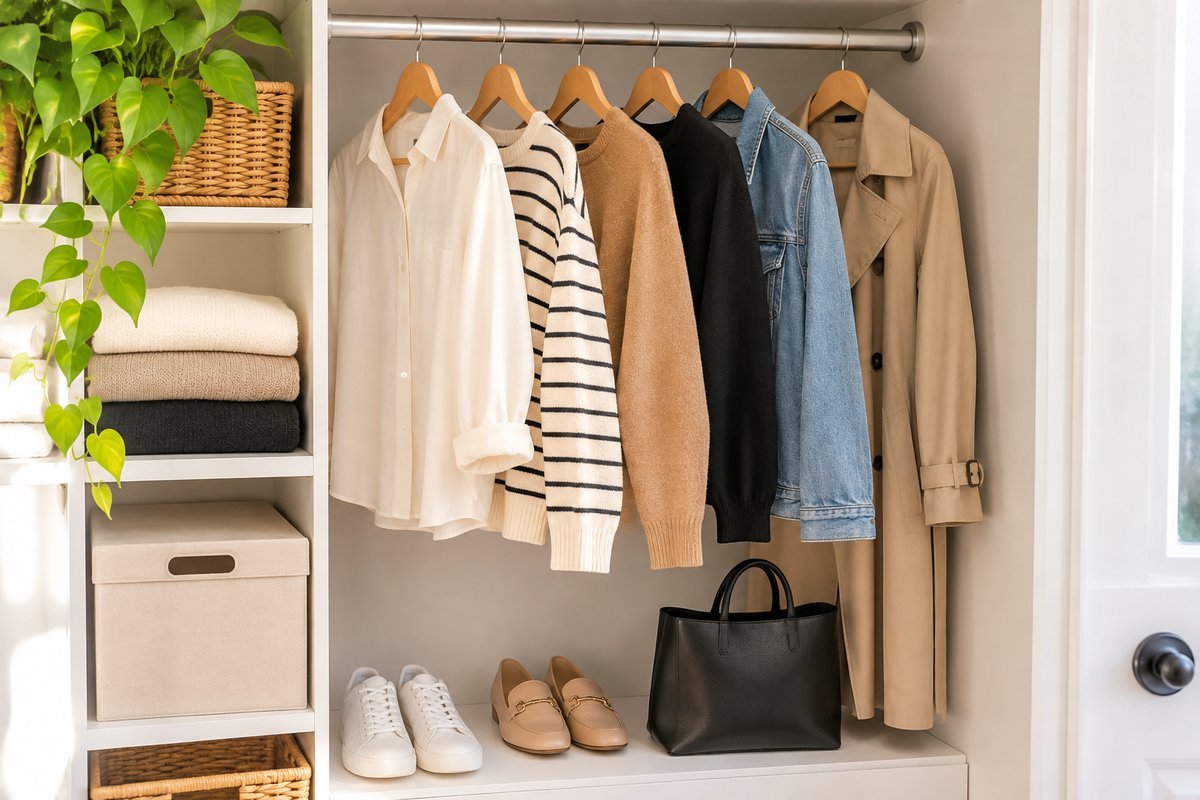
4. Switch to Slim Matching Hangers
This one sounds small, and it is, but it makes a bigger difference than any bin I have ever bought. Bulky plastic hangers and wire hangers eat space and let clothes slide off. Slim velvet hangers take up about half the room, and clothes actually stay put.
I swapped all my hangers in one go (a pack of 50 costs less than one takeout dinner) and suddenly had room for ten more items on the same rod. Use the same hanger for everything. Matching hangers make a closet look calm even when it is full, and that calm feeling is half the battle.
One tip: keep a few sturdy wooden hangers for heavy coats and blazers. Velvet hangers are great for everyday clothes but they can bend under a heavy winter coat. And never hang knit sweaters, by the way. Fold them, or they will stretch out and lose their shape.
5. Shelf Dividers and Boxes That Hold the Line
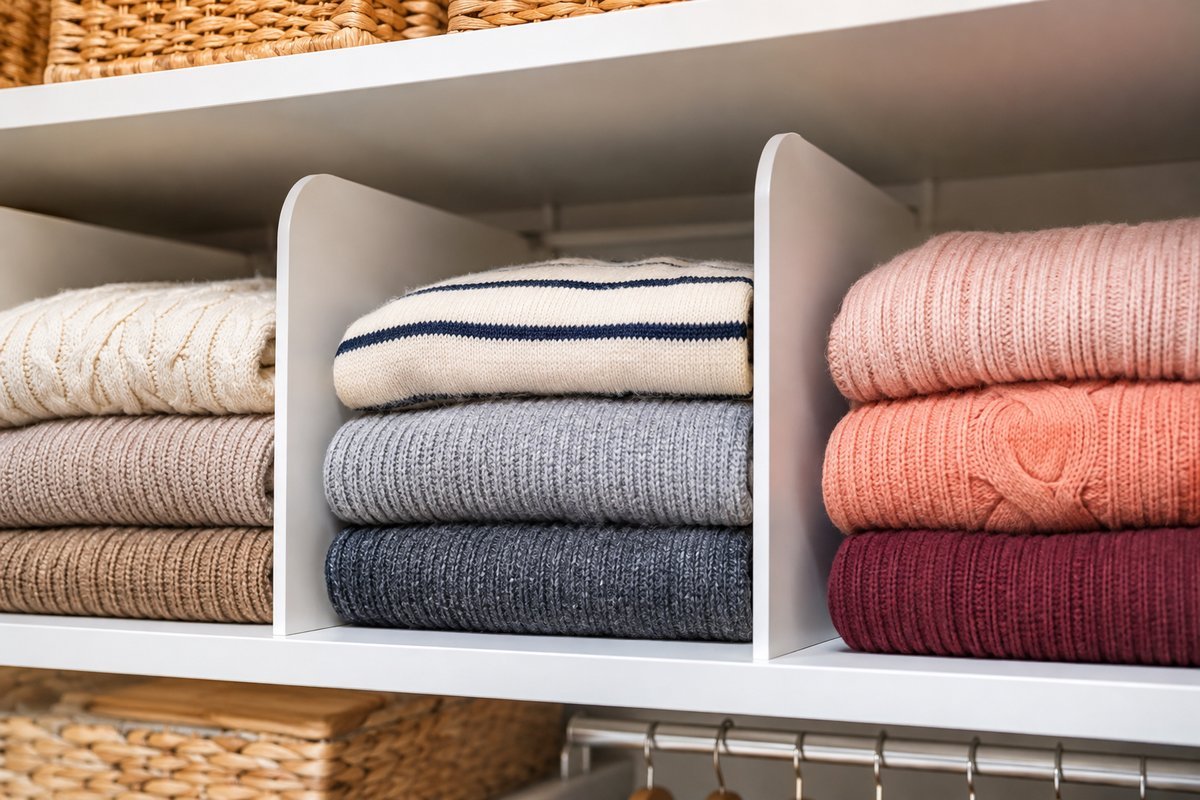
Shelves are where folded clothes go to die. You stack jeans neatly on Monday, and by Thursday the pile has slid into a leaning tower. Shelf dividers fix that. They are cheap little upright panels that clip onto the shelf and keep each stack standing on its own.
I use one divider per stack: jeans, t-shirts, sweaters. No more avalanches when I pull out the bottom shirt. For the top shelf, I use labeled boxes for the stuff I need but do not reach for daily, like scarves, belts, and off-season accessories. Clear boxes work best because you can see what is inside without opening them, and a simple label on the front saves you from guessing.
Keep the labels short and honest. “Winter scarves” beats “misc accessories” every time, because vague labels are just permission to shove anything in there. And keep one box empty on purpose. It is your landing spot for the random things that show up, so they do not end up on the closet floor.
6. Steal Space From the Door and the Floor
When the rod and shelves are full, look at the two places most people ignore: the back of the door and the floor. The back of the door is free storage, and it is perfect for things you grab often. I hung a simple over-the-door rack with hooks for belts, scarves, and tomorrow’s outfit. No drilling, no damage, and it takes five minutes to set up.
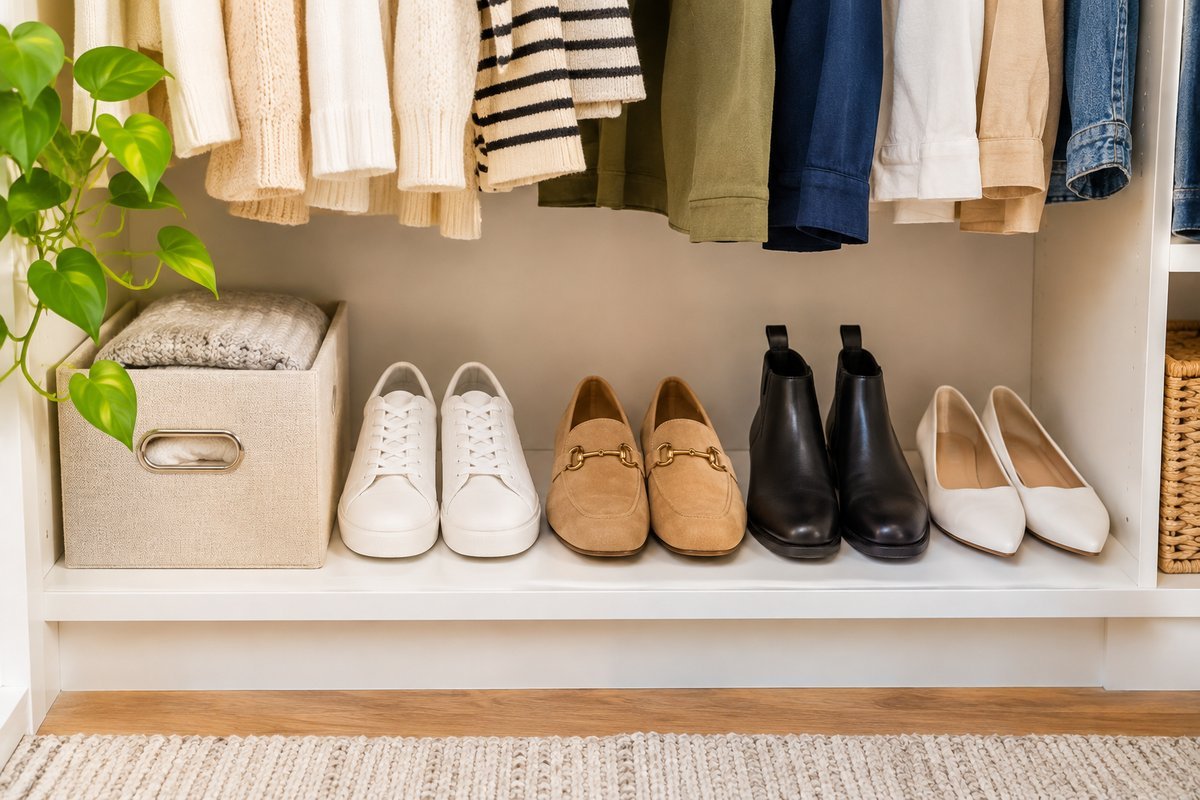
The floor is trickier because it is where shoes and bags tend to pile up into a mess. A low shoe rack or two small baskets keeps it under control. Shoes go on the rack, bags go in a basket, and nothing sits loose on the floor. If your closet floor is deep, slide a flat storage box under the hanging clothes for off-season shoes or extra bedding.
My rule is simple: the floor holds only shoes and bags, nothing else. The moment a random box or bag of “stuff to deal with later” lands on the closet floor, the whole system starts sliding. Keep the floor clear and the closet stays calm.
7. The 5-Minute Sunday Reset
Here is the truth nobody tells you about organized closets: they do not stay organized by themselves. The system that sticks is the one with a tiny bit of upkeep built in. Mine takes five minutes, once a week, usually on Sunday evening.
I hang up anything that got tossed on the chair, refold the one stack that collapsed, put stray shoes back on the rack, and check if anything needs to go in the laundry. That is the whole reset. Five minutes, and Monday morning starts with a closet that looks like it did the day I organized it.
I also follow one small rule that does most of the long-term work for me: one in, one out. Every time a new piece of clothing comes home, an old one leaves. It keeps the closet from slowly refilling, and it makes me think twice before buying something I do not really need. Small habit, big payoff.