
My kitchen is barely bigger than a closet, and for a long time I thought the only fix was a remodel I could not afford. Turns out, that was wrong. A small kitchen feels chaotic mostly because everything lands wherever it fits, not where it belongs. Once I gave every group of things a home, used a few cheap bins, and cleared the counters, the same tiny space started working like a bigger one. No new cabinets, no contractor, and I spent less than fifty dollars in total. If you want to know how to organize a small kitchen on a budget, start here. These are the ten cheap ideas that actually made the difference in my kitchen, and most of them cost nothing at all.
1. Empty One Cabinet at a Time
I used to put off organizing because the whole kitchen felt like one giant job. Then I tried a smaller rule: one cabinet, one evening. I pulled everything out, wiped the shelf, and only put back what I actually use. The rest went into a donation box. Twenty minutes later, I was done, and I did the next cabinet the next night.
One cabinet at a time keeps the mess contained. You never end up with the whole kitchen spread across the floor, which is the moment most people give up. Start with the cabinet you open most, probably plates or everyday mugs. In a week, the kitchen is done.
2. Shop Your Own Kitchen First
Before I bought a single bin, I walked around my home and gathered what I already had. Glass jars from pasta sauce became spice jars. A shoebox became a drawer divider. A small tray I never used became a coffee station on the counter. I found three baskets in a closet that now hold snacks, baking supplies, and cleaning cloths.
This step costs zero dollars, and it teaches you what you actually need before you spend anything. Half the containers people buy end up empty or the wrong size. You probably own more usable containers than you think. Buy only when you know what gap is left.
3. Dollar-Store Bins Beat Fancy Systems
I will be honest with you: I once stood in a fancy home store holding a twenty dollar bin and wondering if it would change my life. It would not. The dollar store sells bins that do the exact same job for a dollar or two. My pantry shelves are full of them.
Pick bins that fit your shelves, and stick to one or two colors so the shelves look calm. Clear bins are great when you need to see what is inside, like snacks or pasta. Solid bins work better for the stuff you would rather hide. A strip of masking tape and a marker makes labels, and the whole system costs less than one takeout lunch.
4. Make Drawer Dividers for Pennies
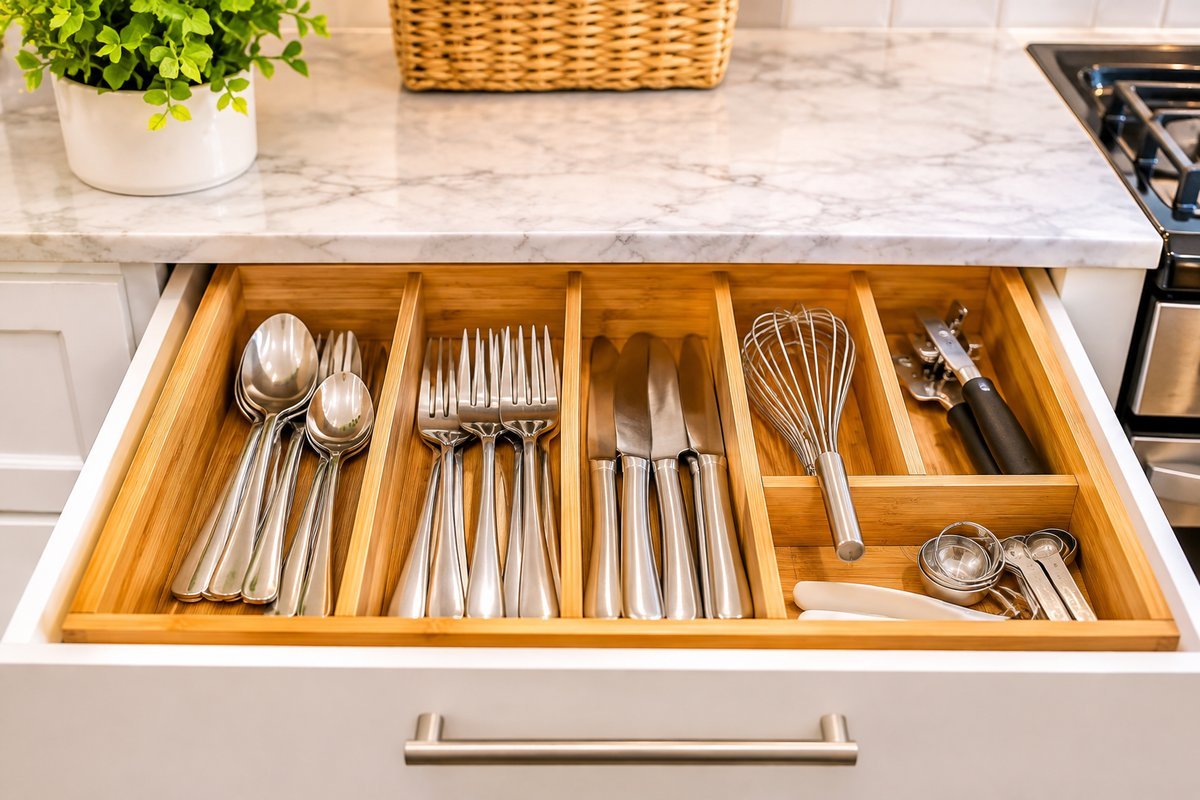
My junk drawer used to be a dark hole where batteries, rubber bands, and mystery keys went to disappear. A set of cheap bamboo dividers fixed it for less than ten dollars. But here is the thing I wish someone had told me sooner: you can make dividers for free with cardboard boxes cut to size and covered in contact paper. My utensil drawer still looks fine a year later.
Measure first, and cut the dividers so they fit snugly, with no sliding around. Give every group its own slot: utensils, measuring spoons, scissors, batteries. When everything has a slot, putting things away takes two seconds. A drawer that opens smoothly makes the whole kitchen feel calmer.
5. Clear the Counters, Keep Only the Daily Three
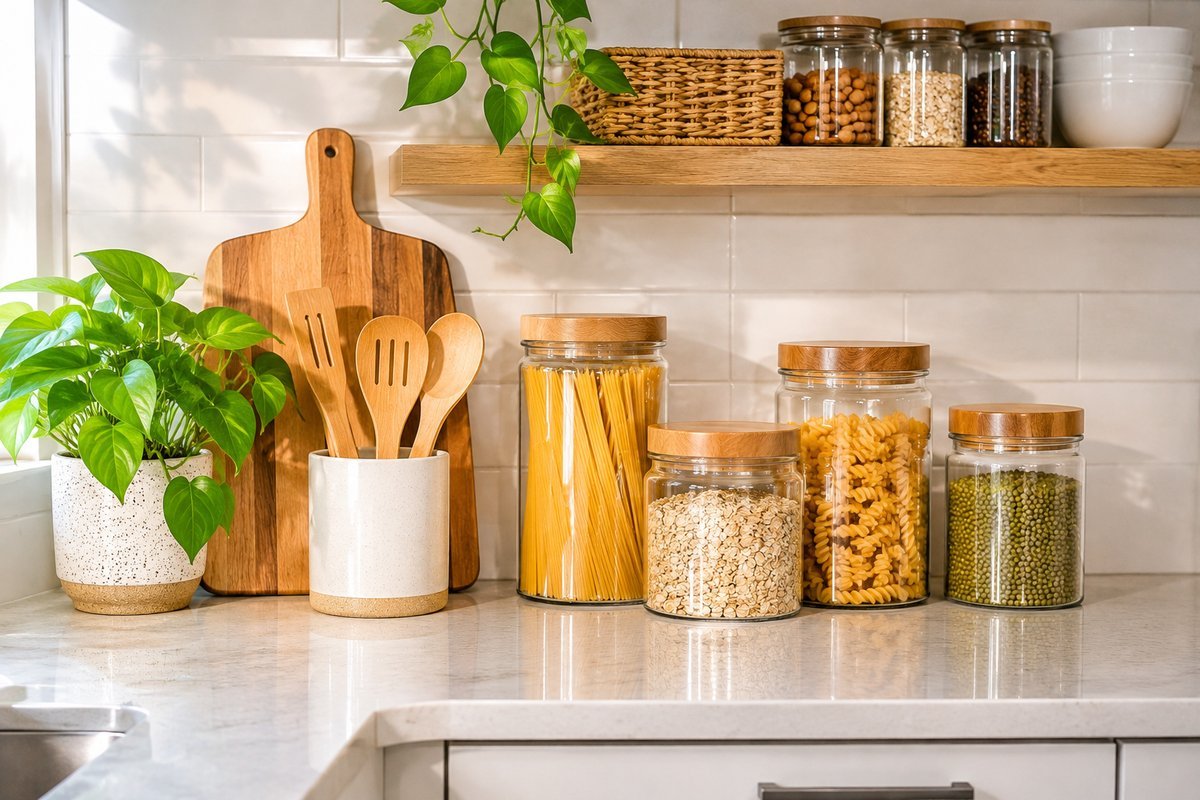
Counters are the first thing you see when you walk into a kitchen, so they set the whole mood. Mine used to hold a blender, a toaster, a stand mixer, a fruit bowl, three bottles of vitamins, and a pile of mail. Now they hold three things: the coffee maker, a knife block, and a small cutting board. Everything else lives in a cabinet and comes out only when I need it.
Pick your daily three, the items you genuinely use every single day, and let them stay. Everything else gets a home behind a door. Pulling the toaster out each morning takes ten seconds, and the clear counter is worth it. A clear counter means you actually have room to cook.
6. Go Vertical With Hooks and Shelf Risers
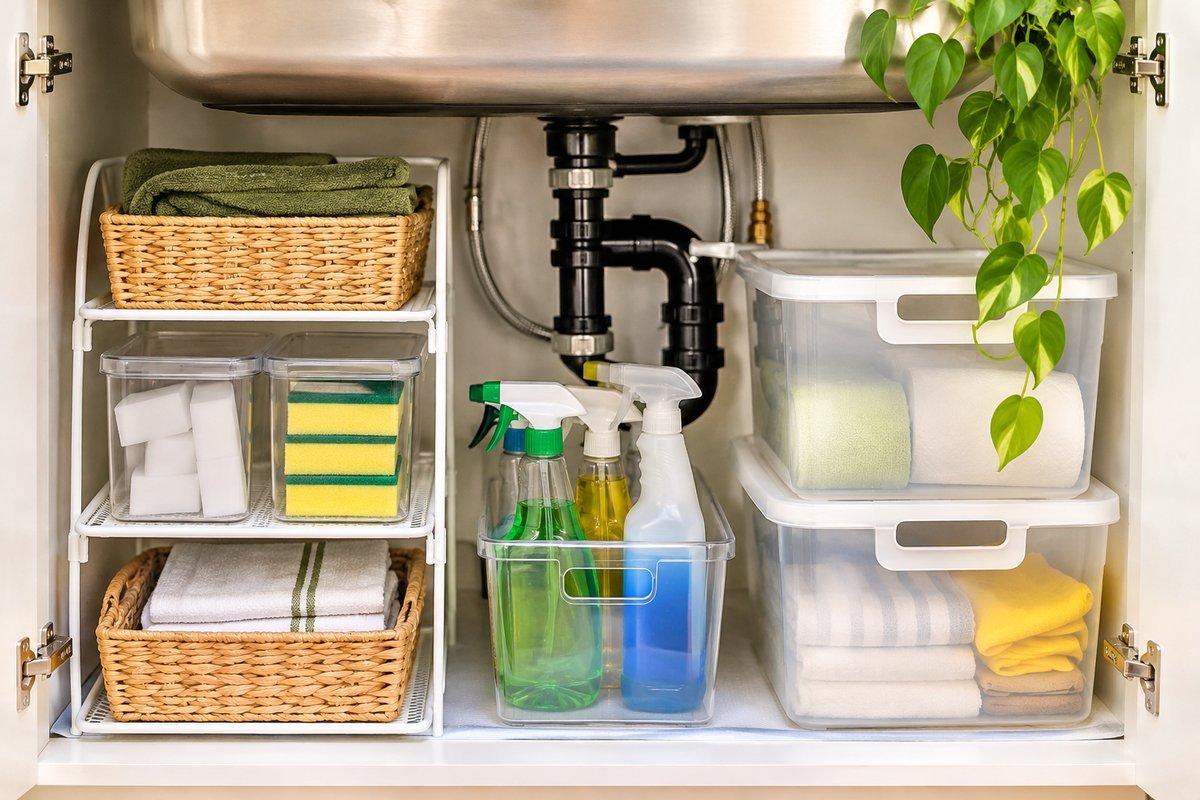
Small kitchens run out of horizontal space fast, so I started looking up. A row of adhesive hooks inside a cabinet door now holds my measuring cups. A tension rod under the sink holds spray bottles by their triggers, which freed up the whole bottom of the cabinet. A ten dollar shelf riser gave me a second level for mugs.
None of this needs drilling, which matters a lot if you rent. Command hooks, over the door racks, and stackable risers all come off cleanly when you move. Look for dead vertical space: the side of the fridge, the inside of a pantry door, the wall above the counter. Vertical storage is the cheapest square footage you will ever add.
7. Zone Your Shelves by Task
I used to store things by size, which meant the baking powder lived next to the dog treats because both were small. Now I store by task, and cooking got much easier. One shelf is breakfast: cereal, coffee, mugs, and bowls all together. One shelf is cooking: oils, spices, and sauces in one spot. One shelf is snacks, so nobody has to dig through the whole pantry for crackers.
Zones work because you stop hunting. When you make breakfast, everything you need is in one place, and you put it all back in the same place. Labels help the rest of the household stick to the system. A small basket on each shelf catches the loose bits, like seasoning packets and snack bars.
8. Use the Inside of Cabinet Doors
The inside of a cabinet door is free storage that most people completely ignore. I stuck a small spice rack on the inside of my pantry door, and suddenly six spice jars were off the shelf. Adhesive hooks inside the sink cabinet hold a scrub brush and a small dustpan. A slim wire rack on another door holds cutting boards upright.
This works best for flat, light things like spices, lids, and cleaning tools. Keep it light, because a door stuffed with heavy items will not close properly and will annoy you every time. Measure first so the rack clears the shelves when the door closes. It is a five minute job that adds storage you did not know you had.
9. Follow the One In, One Out Rule
Here is the truth about small kitchens: they do not get messy because you are lazy. They get messy because new things keep arriving and nothing ever leaves. A new mug, a gadget on sale, a free tote of samples. My rule now is simple. When something new comes in, something old goes out. New spatula? The cracked one leaves. New mug? Pick a least favorite and donate it.
This rule costs nothing, and it is the only thing that stops the slow creep back to chaos. I keep a donation bag in the laundry closet for anything that earns its exit. When the bag fills up, it goes out the door. A kitchen stays tidy when the amount of stuff stays the same.
10. Do a Ten Minute Weekly Reset
No kitchen stays organized by itself, no matter how good the system is. Life happens, dishes pile up, and a bag of groceries lands on the counter. My fix is a ten minute reset every Sunday evening. I set a timer, put everything back where it belongs, wipe the counters and the stovetop, and take out the trash. That is the whole routine, and it works because it is short enough that I never dread it.
The reset matters more than the initial organizing, honestly. A perfect system with no upkeep falls apart in a month. A decent system with a weekly reset stays tidy all year. I do it while listening to a podcast. Pick any evening, and guard those ten minutes like an appointment.